
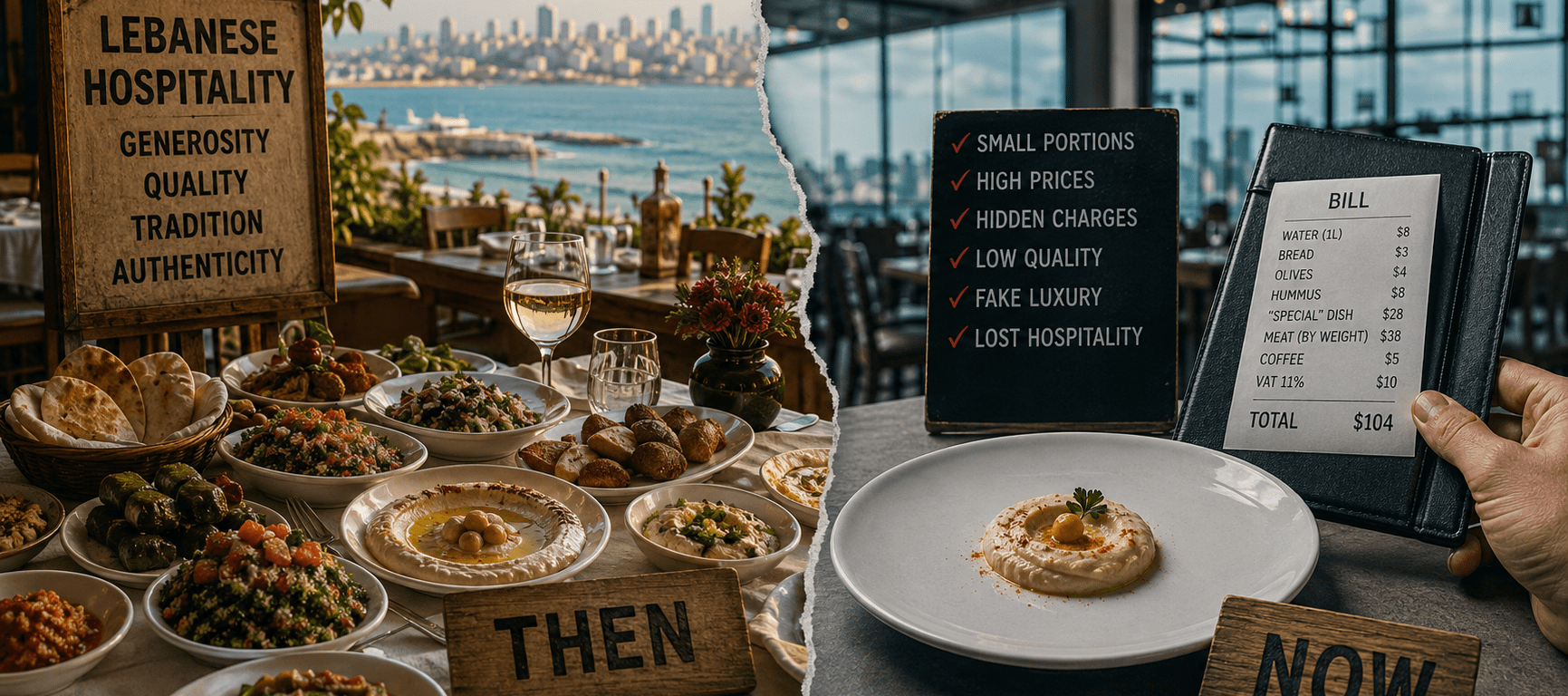
Lebanon’s global reputation was built on many things: its Mediterranean lifestyle, vibrant nightlife, breathtaking landscapes, and above all, its gastronomy. For decades, Lebanese cuisine stood among the country’s proudest exports, a symbol of generosity, refinement, and unmatched hospitality. Visitors from Europe, the Arab Gulf and beyond did not come to Lebanon merely to eat, they came to experience a culture where food was inseparable from warmth, scenery, and social life.
From seaside restaurants overlooking the Mediterranean to mountain terraces hidden among nature-covered hills, dining in Lebanon once represented authenticity at its finest. Lebanese restaurants became internationally recognized for their abundance, fresh ingredients, attentive service, and highly skilled chefs. Restaurant groups, hospitality firms, and food holdings were established not only to serve the local market, but to export Lebanese culinary culture worldwide.
Just fifteen years ago, authentic Lebanese restaurants abroad were still relatively limited in number, and many offered only average interpretations of the cuisine. Beirut remained the undisputed capital of Lebanese gastronomy. Today, however, the paradox is striking: in many cities around the world, Lebanese restaurants now offer a superior experience to the ones found in Lebanon itself.
Behind this reversal lies a long process of deterioration accelerated by corruption, short-term greed, economic collapse, and the gradual abandonment of the standards that once made Lebanese hospitality exceptional.
The Beginning of the Decline
For years, Lebanon’s restaurant industry combined all the ingredients of success: talented chefs, multilingual Lebanese staff, generous portions, excellent service, and locations that transformed dining into a full experience. Tourists flocked to Lebanon to enjoy lavish meals on Beirut’s seafront, in the mountains of Broummana, Beit Mery, or along the coast from Jounieh to Batroun.
Back then, customer satisfaction often outweighed immediate profit. Restaurants competed through reputation and loyalty rather than through aggressive pricing strategies.
The transformation began gradually during the reconstruction boom of the early 2000s, particularly after former Prime Minister Rafic Hariri rebuilt downtown Beirut and tourism from Gulf countries surged. Massive demand triggered a rapid expansion of restaurants, pubs, and hospitality venues.
But the boom came with weak regulation and widespread abuse.
A parallel system emerged in which many businesses allegedly underreported revenues, created duplicate lower receipts, evaded taxes, operated without proper licenses, and relied on political connections to bypass inspections. As long as establishments maintained attractive façades and entertained customers, little attention was paid to what happened behind the scenes. Restaurant owners who were “de mèche” with local officials could often circumvent controls from municipalities, police officers, or ministry inspectors. The industry expanded quickly, but on deeply flawed foundations.
The Crisis That Changed the Industry
For years, Lebanon’s fixed exchange rate 1 USD to 1,500 Lebanese pounds masked many structural weaknesses. To foreign visitors, Lebanon appeared relatively affordable considering the luxury experience offered. However, the illusion collapsed when Lebanon’s financial crisis erupted.
Although economic pressure was already visible by 2017, the collapse fully exploded in October 2019 with the closure of banks, the freezing of deposits, and the dramatic devaluation of the Lebanese pound, which later reached nearly 143,000 pounds per dollar by March 2023.
The consequences on the restaurant sector were immediate and devastating.
Imported food products became unaffordable. Premium ingredients disappeared from many kitchens and were quietly replaced with cheaper alternatives imported from Turkey, Syria, or China. Meanwhile, prices for customers continued rising sharply. The crisis also triggered a massive exodus of skilled labor.
The Brain Drain of Lebanese Hospitality
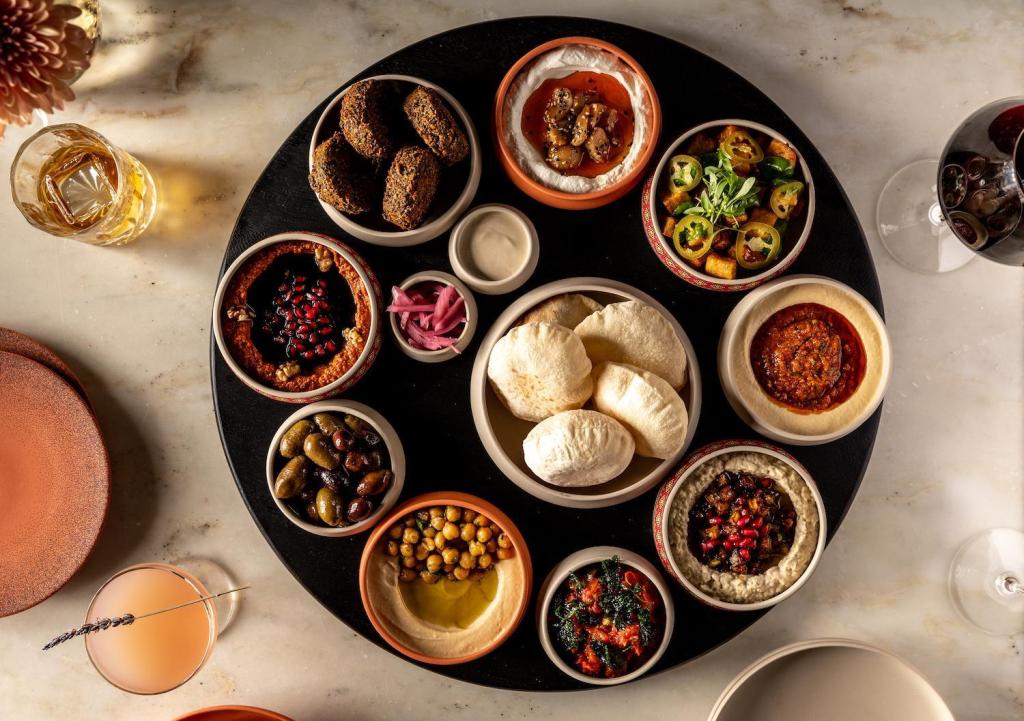
Many of Lebanon’s best chefs, managers, and experienced hospitality workers left the country for Europe and the Gulf, where Lebanese restaurant brands were rapidly expanding. Famous Lebanese establishments chose to export their expertise abroad rather than continue operating under unstable economic and security conditions at home.
As a result, cities such as Dubai, Paris, Riyadh, London, and Montreal now host Lebanese restaurants that often provide better service, higher quality food, and more consistency than many establishments inside Lebanon itself.
At the same time, many restaurants in Lebanon sought to reduce costs by replacing experienced Lebanese staff with cheaper unskilled labor, particularly Syrians willing to work for lower wages. Initially employed in kitchens and dish preparation, many were later moved into customer-facing roles despite lacking hospitality training, multilingual skills, or professional experience.
The decline was not merely culinary, it became cultural.
The Rise of “Fake Luxury”
Lebanon still possesses highly respected culinary institutions such as Babel, Em Sherif, Mounir, and Abdel Wahab. These names earned their reputation through years of consistency, branding, atmosphere, and culinary standards.
But many newer businesses attempted to imitate them superficially.
Menus, presentation styles, “signature dishes,” and even pricing structures were copied without replicating the underlying quality. If a hummus plate costs $8 at Babel, another restaurant would price theirs at $7 or $8 as well, despite lacking the same service, ingredients, atmosphere, or reputation.
Ordinary dishes became “special editions” through decorative plating or minor additions.
A standard eggplant moutabbal priced at $6 suddenly becomes a “special moutabbal” for $9 simply because a few eggplant cubes were added on top. Tiny portions are rebranded as “gourmet experiences,” particularly in highly touristic areas catering to diaspora visitors.
In places such as Batroun, many establishments increasingly target wealthy expatriates and tourists who compare prices to Monaco, Paris, or Dubai and consider Lebanon relatively affordable.
“A bottle of water in Monaco costs more than $8,” some argue; unintentionally encouraging restaurants to normalize absurd pricing.
Seasonal Businesses and Short-Term Mentality
This shift also transformed the business model itself.
Many investors now open seasonal pubs, bars, and restaurants exclusively for the summer months in places like Batroun. Their objective is often simple: maximize profit rapidly, charge premium prices, avoid taxes or licensing costs when possible, then close or rebrand the following season.
This is no longer a hospitality economy built on reputation and continuity; it increasingly resembles a short-term speculative market.
The consequences have also fueled rising real estate prices and inflated commercial rents in tourism-driven regions.
The Tricks Behind the Experience
What frustrates many customers today is not simply high pricing, but the growing perception of manipulation. Many restaurants now rely on subtle techniques designed to maximize the average bill per customer while maintaining the illusion of exclusivity or luxury. Among the most common practices:
- Tiny portions: Often unrelated to inflation or economic hardship, portions are intentionally reduced to encourage customers to reorder multiple plates.
- Reduced complimentary snacks: Crackers, nuts, vegetables, or small appetizers that once accompanied drinks for free are now either limited, poor in quality, or charged separately.
- “Special” versions of ordinary dishes: Restaurants create slightly modified versions of standard menu items to justify inflated pricing. Example: eggplant moutabbal for $6 versus “special moutabbal” for $9.
- Upselling high-margin items: Dishes with minimal production cost are aggressively promoted. Example: a “Halloumi Delight” plate costing $20 consisting of half a portion of cheese, tomato slices, and dried mint.
- Automatic water charges: Water bottles are frequently opened immediately upon seating, especially premium glass bottles priced between $6 and $8 per liter.
- Unexpected side charges: Olives, pickles, or bread baskets often appear on bills despite never being explicitly ordered.
- Manipulative meat pricing: Meat may be priced by skewer, by weight, or through unclear calculations that maximize charges under the justification that red meat is expensive.
- Charging formerly complimentary items: Coffee, tea, and desserts once offered at the end of meals are now billed at premium prices despite often being low-quality products or instant mixes.
- Illegal VAT additions: Some establishments still attempt to add VAT separately despite Lebanese law requiring menu prices to already include taxes.
- Luxury by scenery: High prices are frequently justified by sea views, playgrounds for children, trendy décor, or inflated social media followings rather than actual culinary quality.
Many customers increasingly believe that some businesses internally calculate a target spending threshold per customer; for example, ensuring each table reaches an average of $50 per person regardless of actual consumption.
Whether entirely accurate or not, these perceptions reveal a deeper erosion of trust.
The Consumer Is Also Responsible
Blaming restaurant owners alone would oversimplify the issue. Lebanon’s hospitality sector reflects the broader dysfunction affecting the country itself: corruption, weak regulation, economic collapse, and survival-driven business practices.
Yet consumers also contribute to sustaining the system.
Despite constant complaints about excessive prices, poor service, and deceptive behavior, restaurants continue to fill every weekend. Customers criticize the experience while simultaneously justifying it with phrases such as:
“It’s the same everywhere.”
“What can we do? We still want to go out.”
And perhaps that is the real tragedy.
Lebanon did not lose its culinary identity overnight. It was slowly diluted, replaced by performance over substance, appearance over authenticity, and short-term profit over long-term reputation.
The country that once taught the region the meaning of hospitality now risks becoming a place where generosity is calculated, authenticity staged, and the dining experience engineered less around culture than around extracting the highest possible bill from every table.


