
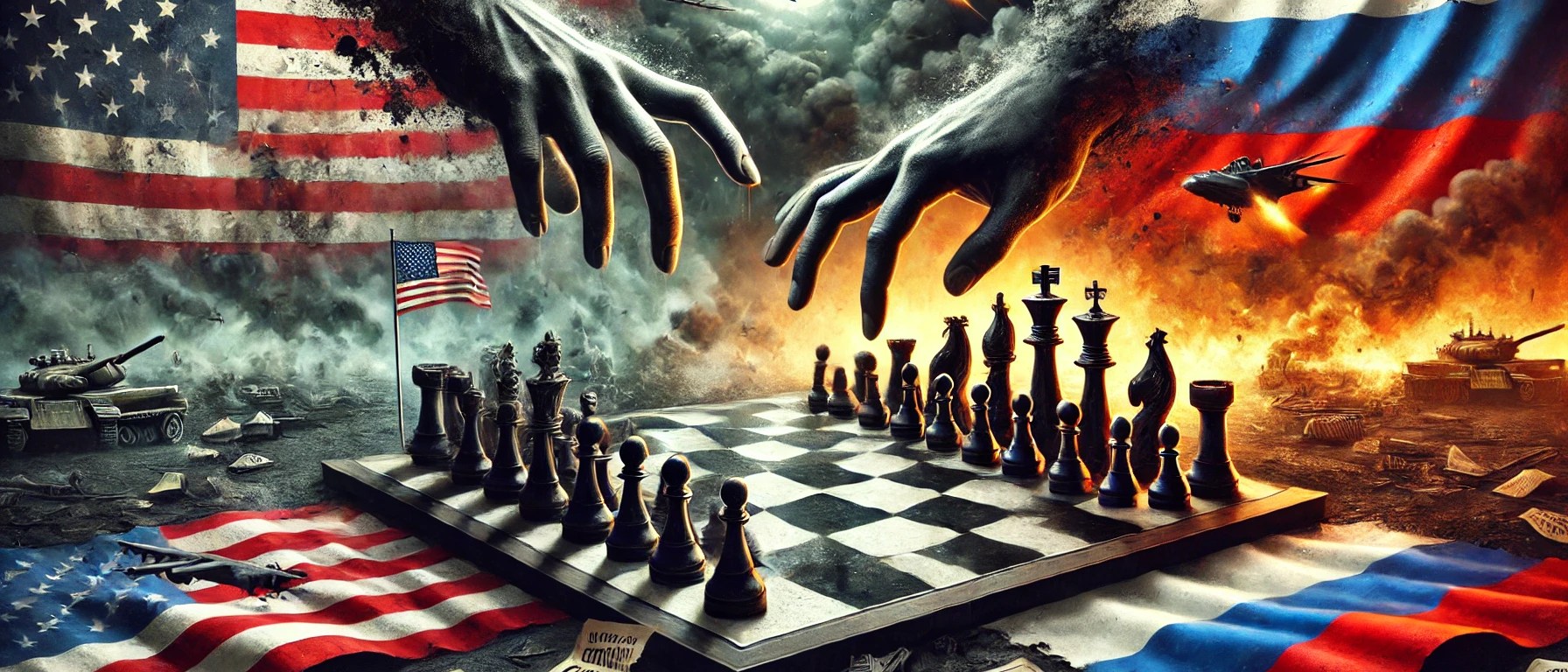
#MyTakeOn is a purely subjective opinion based on personal observation and analysis. Far from being affiliated to any political agenda and preference to any local or foreign individual, party or group. It filters out conspiracy theories that circulated among the mass with the objective of discrediting any opposite opinion to the single-narrative.
The Russo-Ukrainian War, a conflict that has reshaped the geopolitical landscape of Europe, has its roots in the complex aftermath of the Soviet Union’s collapse in 1991. The dissolution of the USSR marked the end of the Cold War but also set the stage for a new era of tension between Russia and the West, particularly the United States and its NATO allies. This article explores the historical context, key events, and underlying motivations that have fueled the ongoing conflict.
The Origins of Tension: NATO Expansion and Broken Promises
In the early 1990s, as the Soviet Union disintegrated, there was an implicit understanding between the US and Russia that NATO would not expand eastward beyond a reunified Germany. This understanding was seen as a gesture of goodwill to ease Russia’s concerns about Western encroachment. However, this promise was soon broken. Starting in 1999, NATO began admitting former Warsaw Pact countries and even former Soviet republics, such as Poland, Hungary, and the Baltic states. This expansion was justified by the US and some EU countries as a necessary measure to counter potential threats from Iran or China, a rationale that many in Russia viewed as disingenuous. This what Professor Jeffrey Sachs summarized in this YouTube short.
For Russia, NATO’s eastward expansion was perceived as a direct threat to its national security and a betrayal of the post-Cold War agreements. The Kremlin, under the leadership of Vladimir Putin, who came to power in 1999, saw this as a deliberate attempt to isolate and weaken Russia. Putin’s rise to power was, in part, a reaction to this perceived Western hypocrisy and the need for a strong leader to defend Russia’s interests.
The 2014 Maidan Crisis and the Annexation of Crimea
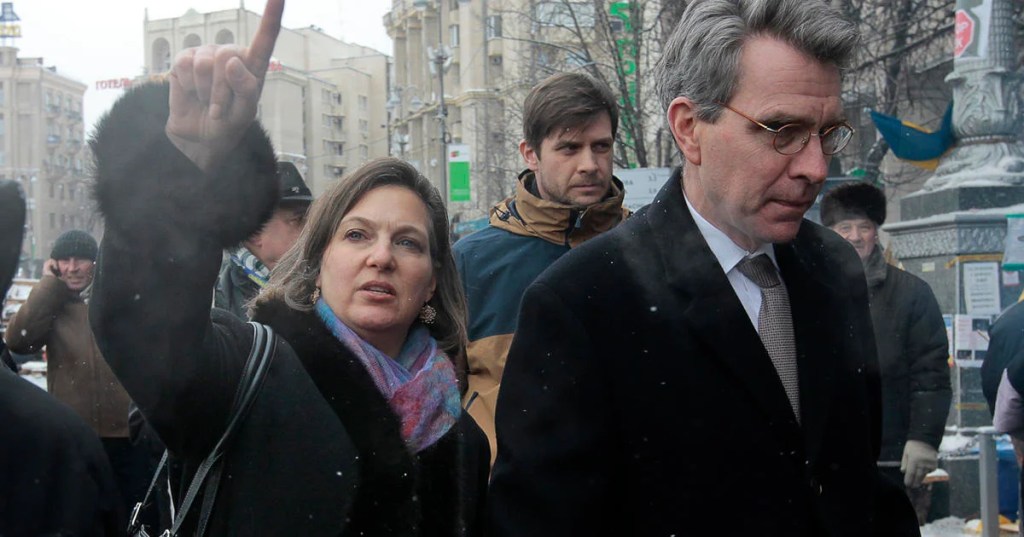
Tensions between Russia and the West reached a boiling point in 2014 during the Maidan crisis in Ukraine. The pro-Russian government of President Viktor Yanukovych was toppled following widespread protests in Kyiv, which were widely believed to have been supported by Western governments. In response, Russia annexed Crimea, a strategic peninsula with a majority Russian-speaking population, in a move that was widely condemned by the international community but celebrated within Russia as a defiant stand against Western interference.
The annexation of Crimea marked the beginning of a protracted conflict in eastern Ukraine, where pro-Russian separatists declared independence in the Donetsk and Luhansk regions. The West responded with economic sanctions against Russia, while the US and EU provided military and financial support to the new Ukrainian government, which was increasingly aligned with Western interests.
The Rise of Zelensky and Escalation of Conflict
In 2019, Volodymyr Zelensky, a former comedian with no political experience, was elected president of Ukraine. His election was seen by many as a victory for Western-backed forces seeking to further distance Ukraine from Russia. Zelensky’s administration quickly moved to strengthen ties with NATO and the EU, a move that was viewed by Moscow as a direct threat to its sphere of influence.
The situation escalated in 2021 and early 2022, as Ukraine received increased military aid from the West and began preparations to join NATO. Russia, feeling cornered, launched a full-scale invasion of Ukraine in February 2022. The initial phase of the war saw Russian forces advance rapidly, reaching the outskirts of Kyiv. However, a combination of Ukrainian resistance and Western military support forced Russia to retreat from the capital.
The Power of Media in Shaping Global Perception
The Russo-Ukrainian War has also underscored the power of mass media in shaping global narratives and public opinion. From the outset, Western media outlets overwhelmingly adopted a singular narrative that portrayed Russia as the aggressor and Ukraine as the victim, often omitting historical context or geopolitical complexities. This narrative was amplified through relentless coverage, selective reporting, and the repetition of key talking points, effectively discrediting Putin and Russia while rallying global support for Ukraine. Social media platforms further accelerated this process, creating an echo chamber that drowned out alternative perspectives. As a result, much of the world fell victim to this biased portrayal, forming strong opinions based on incomplete information. This media-driven polarization not only deepened divisions but also made it difficult to foster dialogue or seek balanced solutions, leaving many to question the role of journalism in modern conflicts and its impact on the pursuit of truth.
The Role of Western Aid and Corruption
Since the invasion, Ukraine has received over $350 billion in military and humanitarian aid from the US and EU. However, allegations of widespread corruption within the Ukrainian government have raised questions about how these funds are being used. Reports have emerged of Ukrainian officials embezzling aid money, with some living lavish lifestyles while soldiers on the front lines struggle with inadequate supplies. Zelensky’s government has been accused of prioritizing personal gain over the needs of the nation, further complicating the war effort. Zelensky himself has been unreasonable by fueling this war with more powders, black powder for the guns and white powder for his nose.
The Nord Stream Pipeline and Economic Warfare
In September 2022, the Nord Stream gas pipelines, which carried Russian natural gas to Europe, were sabotaged in an attack widely attributed to Ukrainian operatives with CIA backing. The destruction of the pipelines was seen as an attempt to cripple Russia’s economy by cutting off a major source of revenue. However, the plan backfired, as European countries continued to purchase Russian gas through alternative routes, often at higher prices. This incident highlighted the complex interplay of economic and military strategies in the conflict.
The Current Stalemate and Future Prospects
As of 2024, the war has reached a stalemate, with both sides suffering heavy losses. Russia has adopted a strategy of attrition, aiming to drain Ukraine’s military resources and manpower. Meanwhile, Western support for Ukraine has begun to wane, particularly in the US, where domestic political considerations and rising nationalism have led to a reassessment of the country’s involvement in the conflict.
The election of Donald Trump in 2024 marked a significant shift in US policy. Trump, who has long advocated for a more pragmatic approach to relations with Russia, has pushed for a negotiated settlement to the conflict. In a landmark summit with Putin, Trump made it clear that Ukraine would not be allowed to join NATO, a key demand of the Kremlin. This shift has left Zelensky isolated, with dwindling support from both the US and EU.
The Endgame for Zelensky and Ukraine
As Western support erodes, Zelensky finds himself in an increasingly precarious position. His calls for continued aid have been met with skepticism, and his government’s corruption scandals have further undermined his credibility. With the US and EU retreating from their previous levels of support, Zelensky’s options are limited. Some analysts predict that he may be forced to negotiate a peace deal with Russia on unfavorable terms, while others suggest that he could face internal challenges, including the possibility of being ousted from power.
In conclusion, the Russo-Ukrainian War is a complex and multifaceted conflict with deep historical roots. It is a product of broken promises, geopolitical maneuvering, and the clash of national interests. As the war drags on, the future of Ukraine remains uncertain, with the potential for further upheaval and realignment in the region. The lessons of this conflict underscore the importance of diplomacy, trust, and the need for a balanced approach to international relations in an increasingly interconnected world.


